Commercial Electrician Solutions for Schools and Campuses

Schools ask more of their electrical systems than almost any other type of building. A campus can look calm from the parking lot, but behind the walls it behaves like a small city. Classrooms, science labs, kitchens, auditoriums, server rooms, security systems, athletic facilities, maintenance shops, and student housing all draw power in different ways, often on overlapping schedules. Add aging infrastructure, tight budgets, and safety obligations, and the electrical work stops being routine very quickly.
That is why a skilled Commercial Electrician is not just a contractor called in when lights go out. On school and campus properties, electrical work shapes day to day operations, emergency readiness, long term maintenance costs, and even the learning environment itself. The best results come from electricians who understand how education facilities actually function, including the need to work around class schedules, testing periods, student move-in dates, after-school activities, and summer renovation windows that disappear faster than most administrators expect.
Why educational facilities are a unique electrical environment
A retail store usually has a predictable load profile. An office building can often shut down major portions of its systems after business hours. A school rarely works that way. Elementary schools may be active from before sunrise, when cafeteria staff arrive, until evening custodial shifts. High schools can have athletic lighting, theater rehearsals, and community events long after dismissal. Colleges and universities often run around the clock.
The electrical system has to support this patchwork without compromising safety. It also has to tolerate a lot of variation. A chemistry lab can place very different demands on circuits than a standard classroom. A campus library may need quiet, uninterrupted backup power for servers and study areas, while a fieldhouse might need robust service for scoreboards, sound systems, and large HVAC equipment.
Older campuses create another layer of complexity. Many schools still operate in buildings that were designed decades ago, before modern computer labs, digital whiteboards, access control systems, high density Wi-Fi, and widespread device charging. It is common to find service panels that are technically still functioning but poorly suited to current demand. In practical terms, that means nuisance breaker trips, overheating conductors, overloaded branch circuits, and a growing habit of plugging power strips into power strips, which is never a good sign.
An experienced Commercial Electrician learns to read these clues early. The visible issue might be flickering lights in a classroom, but the real problem could be feeder capacity, poor grounding, outdated panelboards, or a history of piecemeal additions made over many years without an integrated plan.
Safety is the first priority, and the margin for error is small
Schools serve children, young adults, staff, and the public. That alone raises the standard for electrical work. A minor issue in another setting can become a serious liability in a school where large groups move through hallways, gyms, and assembly spaces every day.
Arc fault risk, damaged receptacles, loose terminations, and failing lighting controls are not abstract technical concerns. They affect real people in occupied buildings. I have seen schools where maintenance teams were doing their best with limited resources, but a quick walk-through revealed extension cords running under rugs in administrative offices, storage rooms packed tightly around electrical panels, and exterior lighting that had failed in key pedestrian routes. None of those conditions are rare. All of them deserve prompt attention.
Life safety systems require special care. Fire alarm circuits, emergency egress lighting, exit signs, smoke control interfaces, and backup power systems need to work every time, not just during an inspection. In school settings, regular testing matters because occupancy is high and evacuation can involve very young students, visitors unfamiliar with the building, or people with mobility challenges. A good electrician does not treat this as box-checking. The work includes clear documentation, coordination with facility staff, and attention to how systems behave under real conditions.
The same goes for security infrastructure. Today’s campuses often rely on electronic door hardware, surveillance systems, intercoms, mass notification equipment, and controlled access points. These systems sit at the intersection of low voltage and line voltage work, and they need a coordinated approach. A camera network is only as reliable as its power path. A lockdown system is only useful if backup power and transfer performance are taken seriously.
The modernization challenge in older schools
Many school districts are managing buildings constructed in phases across several decades. One wing may have relatively modern gear, while the next wing is still relying on electrical equipment that is difficult to service and even harder to expand. That patchwork history creates one of the most common campus problems: systems that technically function, but no longer support the way the building is used.
Classrooms that once had a few receptacles may now need enough capacity for displays, charging carts, projectors, teacher stations, and assistive technology. In science and technical education spaces, the demand can be even more dramatic. Welding labs, fabrication equipment, kitchen appliances, and specialty ventilation all https://remingtonrtyc430.inkharbory.com/posts/how-a-commercial-electrician-supports-compliance-and-safety-training place heavy loads on infrastructure that may never have been designed for them.
Modernization works best when it starts with a realistic assessment rather than a wish list. Load studies, panel condition reviews, infrared scanning where appropriate, and a close look at usage patterns can reveal where the real bottlenecks are. Sometimes the answer is a service upgrade. Sometimes it is panel replacement, feeder rerouting, or redistributing loads to improve balance and reduce stress on older equipment. In other cases, strategic circuit additions and targeted branch renovations can buy meaningful time while a district plans larger capital improvements.
The key is judgment. Not every old panel must be replaced immediately, and not every newer installation is trouble-free. A seasoned Commercial Electrician weighs age, condition, parts availability, current demand, code considerations, and the school’s operating calendar before making recommendations.
Working around occupancy is a job in itself
Electrical work in schools is rarely just electrical work. Scheduling can make or break a project. The same task that would be straightforward in a vacant building can become intricate when students, teachers, and administrators are moving through the space all day.
Summer is the obvious construction season, but it is also short. Districts often have a compressed window between the end of summer programming and the start of teacher preparation. Colleges have a similar crunch around semester turnover and residence hall occupancy. If major shutdowns are needed, the planning must be precise. That means identifying which circuits serve what, confirming temporary power strategies where needed, sequencing demolition and installation carefully, and leaving room for surprises because older buildings always have a few.
Night and weekend work is common for occupied campuses, but it comes with trade-offs. Labor costs can rise, access can be more limited than expected, and troubleshooting takes longer when key staff are offsite. Still, in many active schools it is the right call, especially for service tie-ins, panel replacements, or work near main corridors and shared spaces.
Communication is a major part of the craft here. Facility directors, principals, IT teams, kitchen managers, and security staff all need different information. A power interruption that seems minor on paper can affect testing computers, refrigeration, controlled doors, or after-hours public events. The best electricians learn to ask better questions upfront, not just about amperage and conduit routes, but about how the building actually lives.
Lighting affects more than appearance
Lighting in schools is often discussed in terms of energy savings, but the conversation should be broader. Good lighting supports concentration, visibility, safety, maintenance efficiency, and the general feel of a learning environment. Poor lighting does the opposite. It creates eye strain, leaves security gaps, and makes older buildings feel more tired than they already are.
LED retrofits are common, and for good reason. They can lower maintenance frequency and reduce energy use, especially in large campuses with long operating hours. But not every retrofit is equal. I have seen inexpensive fixture swaps create glare in classrooms, uneven light levels in hallways, and compatibility problems with existing controls. The result may check the energy box while making the space less comfortable.
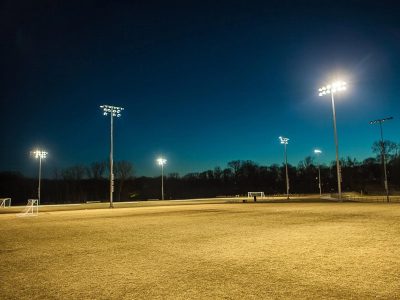
Schools benefit from a more thoughtful approach. In classrooms, color quality and glare control matter. In gyms and auditoriums, mounting height, impact resistance, and aiming are critical. In exterior areas, uniformity and visibility often matter more than raw brightness. Parking lots, drop-off lanes, pathways, and building entrances need reliable illumination that supports both safety and campus security without creating excessive spill or maintenance headaches.
Lighting controls deserve equal attention. Occupancy sensors, scheduling controls, daylight harvesting, and centralized monitoring can all help, but only if they are commissioned correctly and matched to the way spaces are used. A sensor that shuts off lights while students are taking an exam because movement is minimal is not a success story. Neither is a control system so complicated that staff give up and override it permanently.
Power quality and reliability matter more than many schools realize
When people think about electrical reliability, they often picture full blackouts. On campuses, smaller disturbances can be just as disruptive. Voltage fluctuations, poor grounding, harmonics from electronic loads, and isolated breaker trips can interrupt instruction, knock out network gear, damage sensitive equipment, and trigger a flood of service calls.
Computer labs, media rooms, security systems, telecom closets, and administrative servers all benefit from a closer look at power quality. Uninterruptible power supplies have their place, but they should not become a substitute for solving underlying electrical issues. If a school is constantly replacing batteries, losing equipment during storms, or resetting devices after minor disturbances, a deeper investigation is warranted.
Backup power planning is another area where educational facilities vary widely. Some campuses only need emergency lighting and life safety loads covered. Others require support for refrigeration, data systems, emergency communications, health rooms, research equipment, or continuity of operations during weather events. In regions where schools serve as community shelters, generator planning becomes even more important.
There is no single template for this work. A small private school may do well with a tightly focused standby strategy. A large public campus may need a more layered approach with separate priorities for life safety, security, technology, and limited operational continuity.
Here are the electrical priorities that usually deserve the earliest attention when a campus is evaluating reliability:
- Life safety systems and emergency egress lighting
- Main service condition and distribution capacity
- Security, communication, and access control power paths
- Critical IT rooms, network closets, and backup power needs
- Exterior lighting for parking, pathways, and entrances
That order can shift depending on the campus, but those five areas account for a large share of urgent risk.
Specialized spaces call for specialized judgment
Not every building on a campus can be treated the same way. Science rooms, commercial kitchens, workshops, performing arts venues, and athletic facilities each bring their own technical demands.
Science labs often need dedicated circuits, robust grounding, coordination with mechanical systems, and close attention to shutoff and isolation requirements. Commercial kitchens can be deceptively complex because cooking equipment, refrigeration, dishwashing, makeup air, and cleaning procedures all affect the electrical layout. Gyms and fieldhouses bring high-bay lighting, scoreboards, motorized equipment, and sometimes older distribution serving newer amenities that were added over time. Auditoriums add dimming systems, audio equipment, rigging power, and the constant tension between theatrical flexibility and building-wide reliability.
Residence halls on college campuses are another category entirely. Students bring a surprising amount of personal electrical load, from gaming systems and mini fridges to hair tools and charging devices. If the building is older, receptacle quantity and circuit design may not align with present day habits. That can lead to breaker trips, overheated connections, and a lot of unauthorized plug-in devices. In these settings, electrical planning often intersects with policy, housing operations, and resident education.
Preventive maintenance saves more money than emergency calls
A reactive approach is expensive on school properties. Emergency electrical work usually happens at the worst possible time, often when a building is occupied, a program is underway, or weather is already making conditions harder. It also tends to expose hidden weaknesses that could have been found earlier.
Preventive maintenance is not glamorous, but it pays off. Tightening and torque verification where appropriate, breaker testing, thermal imaging in the right contexts, cleaning of electrical rooms, exercising transfer equipment, checking exterior lighting, and reviewing panel directories all reduce risk. Even basic housekeeping matters more than people think. Clear access to electrical equipment, dry rooms, intact covers, and accurate labeling can shave hours off troubleshooting when something does fail.
One school facility manager I worked with had a simple rule: if a panel schedule did not match reality, it got corrected before the month ended. That seems almost mundane until the night a wing loses power during a storm and the response team can isolate the issue in minutes rather than tracing mislabeled circuits in the dark. Small discipline prevents large chaos.
A strong maintenance program usually includes a practical site review that looks for common trouble signs:
- Warm or buzzing panelboards
- Repeated breaker trips in the same areas
- Damaged receptacles, switches, or cover plates
- Exterior lighting outages affecting security routes
- Extension cord reliance where permanent power should exist
None of these symptoms should be normalized. They tend to point to bigger system or usage issues.
Energy efficiency should not come at the expense of usability
Administrators understandably focus on utility costs. Energy projects can make a real difference, especially on large campuses with long operating schedules. Still, the cheapest electrical upgrade is not always the best value over time.
A thoughtful Commercial Electrician considers maintenance burden, staff familiarity, replacement part availability, and how systems respond in real use. A heavily networked control platform might promise excellent savings, but if the campus lacks the staff or service support to manage it, that sophistication can become a liability. By contrast, a simpler system with reliable programming and clear local control may deliver slightly less theoretical savings but far better long term performance.
Load management is also worth discussing. On campuses with large HVAC equipment, kitchen loads, EV charging, or planned building additions, understanding peak demand can shape better investment decisions. Sometimes a school can postpone expensive service upgrades by staging loads more intelligently or by bundling efficiency work with targeted electrical improvements. Sometimes the opposite is true, and a district is already living on borrowed capacity. Honest analysis matters more than optimism.
Coordination with other trades is where good projects become great ones
Electrical work on campuses rarely happens in isolation. Renovations often involve HVAC upgrades, fire alarm changes, ceiling replacements, data cabling, security modifications, roofing work, or accessibility improvements. Coordination failures are costly in any building, but schools magnify the impact because timing is so compressed.
If a ceiling crew closes a corridor before electrical rough-in is complete, the schedule slips. If a rooftop unit arrives before power is ready, the mechanical startup is delayed. If IT assumes a telecom closet will stay live during a panel cutover, network service can disappear across an entire wing. These are ordinary project problems, but on active campuses they quickly become operational problems.
The electricians who earn repeat work from school districts are usually the ones who think beyond their own scope. They flag access issues early, ask how shutdowns affect classroom technology, verify pathways before walls close, and communicate in plain language. Technical competence is essential. So is foresight.
Choosing the right electrical partner for a school or campus
Price matters in education work. Budgets are real, procurement rules are real, and every dollar gets scrutinized. Yet schools pay dearly when they choose based on price alone and ignore experience with occupied institutional environments.
The right electrical partner understands documentation, permitting, shutdown planning, safety procedures, and the rhythm of school operations. They can explain why one panel replacement should happen immediately while another can wait. They know that a kindergarten wing, a university research building, and a campus dining hall may all sit under the same owner but function very differently. They are comfortable working with facility teams that know their buildings well and may have records going back decades.
That last point matters. Good school electricians respect institutional memory. The head custodian who remembers which hallway flooded in 2009 and which breaker trips every humid August often knows something no drawing set will tell you. Listening saves time.
What durable electrical planning looks like over the next decade
Most campuses are balancing several trends at once: more technology in instructional spaces, stricter expectations around safety and security, greater pressure to reduce energy use, and a growing backlog of deferred maintenance. Electrical planning sits in the middle of all of them.
Durable planning does not mean replacing everything at once. It means creating a roadmap grounded in building condition, operational priorities, and realistic funding cycles. For one district, that may start with emergency lighting, service gear, and corridor lighting. For another, it may mean upgrading residence hall distribution, improving network power resilience, and preparing athletic facilities for expanded use. On a university campus, it may involve phased substation or feeder work tied to capital projects over several years.
The practical goal is not perfection. It is reliability, safety, serviceability, and enough flexibility to support the next round of academic and operational change without forcing staff into constant workarounds.
A school that can power its learning spaces reliably, illuminate its grounds safely, support its security systems, and modernize in phases is in a far stronger position than one that keeps patching the same problems every semester. That kind of resilience does not happen by accident. It comes from disciplined maintenance, realistic planning, and the judgment of an experienced Commercial Electrician who understands that on a campus, every electrical decision reaches further than the panel room.
Paxos Electric Company, LLC
255 NJ-15
Wharton, NJ 07885
(973) 598-8543
FAQ About Commercial Electrician
How much should a commercial electrician charge per hour in Wharton NJ?
Hourly rates vary by contractor, job complexity, and timing. Ask whether the quote includes a service minimum, travel, materials, and any after-hours charges. A written estimate makes it easier to compare the total cost.
How to estimate commercial electrical jobs?
Start with a defined scope and a site walkthrough. Share the plans, equipment specifications, site access details, and any limits on shutdowns. Ask the contractor to itemize labor, materials, and testing, and to identify permit responsibilities and exclusions.
Do any electricians give free estimates?
Some contractors offer free estimates for planned projects. Paxos Electric Company offers free estimates for commercial electrical work. Ask when scheduling whether troubleshooting or diagnostic visits carry a separate fee.